Florence Emma Nichols
Florence Nichols earned a B.A. from McMaster University in 1934 and began a career in education that spanned nearly four decades, as a teacher of French and physical education. Before retiring, she worked with the Etobicoke Board of Education to establish its French Immersion program. A niece, Cecilia Nichols, describes her aunt as a remarkable, Christian woman. “She was upright, old fashioned, competent and very much in touch with the world. You definitely behaved yourself around her.” Miss Nichols was a Waterdown resident who led an active social life and enjoyed hosting tea parties in the spring on her four acre field of trilliums. “My aunt was active to the very end. She traveled until well into her 80s. She belonged to a French club, taught Sunday school, did most of her own gardening and attended St. James United Church.” A supporter of several charities in her will, Miss Nichols remembered the Foundation with a bequest.
Excerpt from 1996-1997 Annual Report
Thérèse and Kent Newcomb
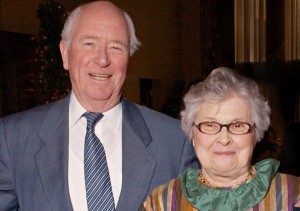 “Look at this picture,” says Thérèse Newcomb, pointing to a drawing of a woman pulling a rainbow of multi-coloured yarn through a loom to create a beautifully intricate flower-filled world. “It struck me that this is exactly what the community foundation is good at doing – weaving the community together.”
Thanks to Thérèse and Kent Newcomb, HCF this year began to weave a community-wide response to a childhood tragedy: bullying. Statistics show that 25% of high school students are bullied, and the effects of repeated abuse are debilitating and far-reaching. At a time of life that should be light and carefree, children who are bullied experience terror and anguish. The ramifications are life-long.
The Newcombs were appalled by ever-increasing media reports of bullying. They decided they couldn’t stand by on the sideline without trying to do something about it. They brought their concern to the community foundation.
“Bullying is a terrible problem,” says Kent, ”but we felt the tide was running on this issue and the community was ready to work together on it. With a modest investment from us and leadership from Hamilton Community Foundation, Hamilton may be able to take a lead role in alleviating bullying. We hope it might become a model for the rest of the country.”
The Foundation began by collecting information about the extent of bullying in local schools, the responses that have been designed to date, and what research can tell us about the best ways to address the problem. “The Foundation is becoming an important repository of information and intelligence on community issues and this is a good example of that approach,” Kent says. He is a former chairman of Hamilton Community Foundation and a founding board member of HCF’s national membership organization, Community Foundations of Canada. “The community foundation movement is becoming very good at convening – bringing groups and individuals together to tackle issues of common concern. HCF and other community foundations are developing a reputation for innovation on social issues.”
Hamilton’s anti-bullying initiative, now a Roundtable of more than 25 organizations including the two school boards, youth-serving organizations, the police, parents, media representatives, children’s aid societies, public health, McMaster University, the Community Child Abuse Council, and other important groups, is designing a community-wide strategy to reduce and prevent bullying.
“We’re encouraged that so many organizations in the community are coming together to combat this problem and create a safe environment for children,” says Hamilton-Wentworth District School Board Superintendent, Jim Webberley.
The Roundtable is looking carefully at programs in North America and Europe that have documented success, and in 2003 it will propose a multi-faceted, multi-year plan for Hamilton and seek funding support from a variety of sources.
Donna Fraser-Simmons, a parent and member of the Balaclava School Council, says she is involved in the Roundtable “because I’ve seen how damaging bullying is. This initiative is giving us hope that Hamilton’s future – its kids – will be able to achieve their personal best in a safe and nurturing environment in which the bullying has no power and bystanders have become interveners.”
Thérèse and Kent Newcomb share that vision. “We may not cure the problem completely,” they say, “but by working together as a community, we can certainly make a decided difference.”
Excerpt from 2002-2003 Annual Report
Marjorie & Bill Nelson Fund
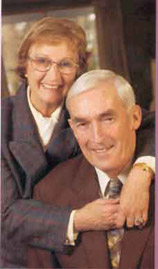
Marjorie and Bill Nelson are the type of people that any community would be proud to claim as citizens. Actively engaged in an incredible scope of community projects, clubs, good works and institutions, this Burlington couple is also disarmingly modest about their generosity.
Yet the impact of the Nelsons’ donations can be felt throughout Hamilton and Burlington. And the cornerstone of their philanthropy is Hamilton Community Foundation.
Bill, a retired chartered accountant and business owner, was chair of HCF’s Board in 1990-91 and saw first-hand how the Foundation benefits all sectors of the community. He also knows the Foundation needs to be properly resourced in order to do its work well. Since the late 1980s, the Nelsons have been building their Administration Endowment Fund, which now totals $100,000, to help cover the costs of operating HCF.
“We’re happy to see some administration costs get covered through our endowment, because it means other monies can go to their many community projects,” Bill says.
Marjorie and Bill also enjoy the convenience of a Flow-Through Fund at HCF, which they started six years ago to benefit the wide range of local charities they like to support, including Bill’s Rotary Club, their own church, United Way, McMaster University, Mohawk College, Royal Botanical Gardens, YMCA, YWCA, local hospitals, the arts and a number of social service organizations.
The flow-through Fund allows a donor to receive a full charitable tax receipt for the fair market value of an asset in the year it’s given to the Foundation. The Nelsons’ gift of marketable securities gave them a significant tax saving. Each year they select the charities to support and send a list to the Foundation for distribution of the funds.
Marjorie and Bill remain firm fans of the community foundation movement. “HCF really is a people’s Foundation,” Bill comments. “There are no strings attached, no commercial or political aspects to the Foundation. Smaller donations can make big things happen in the community – there’s a place for everyone at HCF.”
Excerpt from 2004-2005 Annual Report
Margaret Lillian Murgatroyd
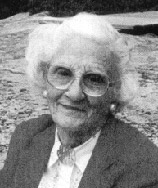
Calm, organized and efficient are among the qualities attributed to Margaret Murgatroyd by her daughter. Beth Lennard says her mother was a private person who gave a lot of her time to community affairs but managed to make it seem effortless. She was involved with numerous organizations from the Ontario Garden Club and the Red Cross to Hillfield-Strathallan College. As a life-long parishioner at Centenary United Church – the church her parents also attended – she often volunteered for church activities.
Margaret was born on August 4, 1907 to noted Hamilton surgeon John Roland Parry and his wife Evelyn. As a child, she traveled to Europe with her parents where Dr. Parry pursued medical studies in London, Vienna and Berlin. (When they returned, her father brought with him a revolutionary new X-ray machine.)
Margaret married lawyer Fred Murgatroyd in 1930. They had two children, Beth and Bob, and celebrated their 50th wedding anniversary shortly before Fred’s death. Bob remembers his mother as a vivacious, disciplined woman with a caring and generous nature. “Her 10 great-grandchildren and eight grandchildren adored her. Even when she was ill, she didn’t lie in bed. She would get up, dress like a lady and be ready to go. She never complained.”
Margaret also enjoyed sports, particularly downhill skiing, golf and curling. “She loved to visit the Royal Botanical Gardens. She walked everywhere and had very sharp eyesight all her life. In fact,” Bob laughed, “When she was in the car with me, she would point out all the stop signs.”
In 1998, Margaret celebrated the 70th anniversary of her graduation from the University of Toronto; she was well into her 80s when she gave up driving herself to North Carolina to join her sister Rosa for a holiday.
Margaret died in June 2000 and left a bequest to the Foundation that has become part of the Ontario Endowment for Children and Youth in Recreation Fund. Beth recalls when her mother made the decision to remember the Hamilton Community Foundation in her will. “She had faith in the Foundation because it changes with the times and takes care of the community. It was a determined choice. She felt the money would be wisely spent.”
Excerpt from 2000-2001 Annual Report
Ella Baird & Grace Baird McQueen Memorial Fund – A.J. McQueen
Ella Baird enjoyed a remarkable life and career as a pioneer in industrial nursing. The eldest of ten, she was born in a log cabin built by her Scottish grandfather in Grey County, Ontario. Upon graduation in 1919 from the Hamilton City Hospital Training School, Miss Baird became the hospital’s operating room supervisor for two years and then engaged in private duty nursing. In 1931, she entered the employ of the Canadian Westinghouse Company Limited, resigning 20 years later as Director of Nurses and Welfare Services at its West Plant.
The President of Westinghouse, Paul J. Myler, and his wife, Maude Lottridge Myler, invited Miss Baird to live with them in their home at 61 Robinson Street, the present site of the Royal Hamilton Military Institute.
Ella Baird remained with the Mylers, who were childless, and on their deaths, received two inheritances. At her passing at the age of 92 in 1988, part of this legacy was left to her nephew, A.J. McQueen. To honour his aunt and in memory of his mother, Ella’s sister, Mr. McQueen established this Fund in 1992. In time, when the Fund has grown through annual gifts, the income is to be used for charitable purposes in the community, as Mr. McQueen wrote, “to shed a little light on what might have otherwise remained dark”.
Excerpt from 1993-1994 Annual Report
Jack McNie
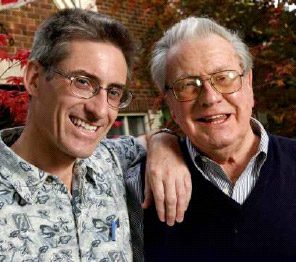
Jack McNie and his son Scott McNie
By the time he passed away last year, Jack McNie had enjoyed the great pleasure of having already donated much of what he’d earned in his career to grassroots community projects, in Hamilton and around the world. He also left a bequest to Hamilton Community Foundation. Throughout his career, Jack gave not only financially, but in time and caring.
After graduating from art school, Jack worked in advertising, rising to the position of president at the former RT Kelley advertising agency in Hamilton.
Along with his wife Mary, he co-founded an insurance company for non-drinkers and established one of the first co-operative daycare centres in Canada. As a young couple with a large family, they still found time to organize outings for local foster children and to be involved in other youth initiatives.
Following the early death of Mary, Jack was blessed yet again by the support and shared common interests of his second wife, Bernice. With her support, he traveled the world – taking a direct interest in promoting adult literacy in South Africa, the Philippines and Nicaragua.
As MPP for Hamilton West in the early 1970’s, and Minister of Colleges and Universities in the Bill Davis government, Jack also began the process of reclaiming Hamilton’s lakeshore for the public, and played a key role in bringing both Hamilton Place and the Convention Centre to Hamilton.
“He was a tremendous example as a father and businessman, with a strong sense of community awareness,” says John, one of the five McNie offspring, along with Fran, Heather, Scott and Mary. “We are so pleased that our dad’s memory is being kept alive through his legacy gift to Hamilton Community Foundation.”
Excerpt from 2006-2007 Annual Report
Flora L. McNeil Fund
Flora Louise McNeil is remembered for her passion for music and the great pride she took in her heritage.
Her grandfather, Joseph Cline was deputy reeve of Ancaster in 1879 and Cline Avenue in Westdale is named for him. Her great-grandfather, Major Richard Hatt, was an officer of the 1st Regiment and a prominent Dundas citizen. Mrs. McNeil was born in 1907 and after graduation from business college, she was a secretary for several years at Eaton’s in Hamilton. Her husband, Bill, owned McNeil’s Bakery in Stoney Creek.
Grayce Krouse described her cousin as having a wonderful sense of humour. “We talked every day. Our conversations were always interesting because she kept up with current events. She was a beautiful pianist and played right to the end. When she played O Canada, she really showed her love for her country.”
Mrs. McNeil belonged to the Stoney Creek Charter Women’s Institute, Church of the Redeemer and the Women’s Auxiliary of the Anglican Church of Canada (Life member) where she served for several years as secretary treasurer.
She died while making dinner in her Stoney Creek apartment on the same day her brother Donald Campbell died. Mrs. McNeil left the residue of her estate to the Foundation.
Excerpt from 1996-1997 Annual Report
McGregor Clinic Fund
On September 1, 1922, Doctors J.K. McGregor and F. B. Mowbray who had been practicing surgeons, joined together with four other doctors to form the McGregor-Mowby Clinic at 250 Main Street East in Hamilton.
Dr. Mowbray died in 1931 and the Clinic became the McGregor Clinic. The primary motivation was to have a number of doctors working together with laboratory and radiology facilities and to better serve the patients in various fields of medicine.
In 1946, Dr. McGregor died and the staff doctors bought the Clinic from his Estate and established a group practice with an elected Board of Governors. It was incorporated as a non-profit corporation, called the McGregor Clinic. Two members of the Board were non-medical community representative and a number of senior executives from industry and the University helped guide the policies of the Clinic.
Many members of the Clinic staff became leaders in various medical fields – in hospital, community and national associations.
The McGregor Clinic was a referral resource for this part of Ontario for many years. Its role however, gradually diminished with the changing medical scene and the arrival of the medical faculty at McMaster in which most of the staff participated.
On January 31, 1981, the Clinic closed and surrendered its Charter. The residual funds were donated to the Foundation to establish a Fund to assist research and education in the health sciences, including medicine, dentistry and nursing.
The McGregor Clinic gift of some $115,000 a number of years ago generated the idea for an expanded pool of resources for community health. When the Clinic closed in 1981, its members donated the proceeds from the sale of their building to the Foundation to establish a fund to seed health care research and education projects with potential to improve quality of life in the community.
This Fund forms part of the Community Health Education and Research Fund.
McCallum McBride Fund
The McCallum, McBride Fund was placed under the umbrella of Hamilton Community Foundation this year, with its current directors forming the Fund Advisory Committee of the new donor advised fund. Originally incorporated in 1966 as The McBride Foundation, it has made grants totaling more than $200,000 over the years in the areas of the environment, and abused women and children. Grants are also made annually to help local agencies provide Christmas gifts and holiday food baskets. The fund will continue to grant in those fields.
The McBride Foundation was originally established by Peggy McBride, the granddaughter of the founder of Robinson’s, Hamilton’s long-time department store. She left her estate to her foundation when she died in 1978. The McBride Foundation was managed until recently by Peggy McBride’s lawyer, Doug McCallum, with a Board of Directors of knowledgeable community volunteers. Doug remembers encouraging Peggy to create a foundation with her estate. “I liked Peggy very much,” he says, “and life threw her some challenges. She was a generous spirit.”
Over the years, The McBride Foundation has grown, thanks to additional financial contributions from friends of the foundation. To honour Doug McCallum’s key role
in its development, the Advisory Committee has chosen to rename the fund McCallum, McBride.
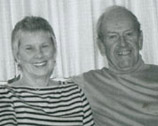
“Doug McCallum has been the heart and soul of this foundation over the years,” says Carole Capling, the current Chair of the Fund Advisory Committee (pictured with Doug). “And we’re delighted that Doug and Mary’s son, John, has now come onboard too.”
Hamilton Community Foundation will take over administration and investment responsibilities for the fund, while the Fund Advisory Committee retains involvement in the grantmaking decisions. The McCallum, McBride Fund is one of several foundations for which HCF has been chosen as “successor.”
Excerpt from 2002-2003 Annual Report
Robert P. McBride Fund
In 1900, a young entrepreneur from London Ontario, described by his contemporaries as a “born merchant with an alert sense of promotion”, took over a Hamilton department store and renamed it G.W. Robinson – so began a retail success story. The flagship store on James Street South at King Street West is now a parking lot, but the family’s legacy lives on in its substantial support of the Hamilton Community Foundation.
Away from his demanding business life, Mr. Robinson enjoyed many leisure pursuits through his memberships at such clubs as The Thistle, the Hamilton, the Caledon Mountain Trout and the Hamilton Golf and Country Clubs. As well, he belonged to the Hamilton Chamber of Commerce, the Scottish Rite and Barton Lodge.
Mr. Robinson and his wife Esther, had a daughter, Kathleen Lenore and a son, Lieutenant George Victor, who died in 1916 during the First World War. In 1917, Kathleen, also known as Kitty, married Robert Pickard McBride. Their match was a balance of Robert’s gregarious, open personality and Kathleen’s quiet reserve.
Robert Pickard McBride was admitted to the Ontario Bar in 1911 and later appointed Queen’s Council and practiced corporate commercial law at the firm Lees, Hobson and Co. until 1924, when he left to establish the law firm of Peat & McBride. Later he became a senior partner in the firm of McBride, Hickey, Green & McCallum. The firm lives on today under the name of Ross & McBride.
Robert’s community involvement included a fraternal affiliation with the Barton Lodge, Ancient Free and Accepted Masons, as well as memberships in the Murton Lodge of Perfection, the Hamilton Club and the Hamilton Golf and Country Club. He was also a lieutenant in the Reserve Battalion of the Royal Hamilton Regiment.
Mr. McBride also served as one of The Hamilton Community Foundation’s earliest Directors, being elected to the Board of Directors in 1958. He was also a long-time member of the Board of Hamilton Sanatorium.
Miss Melba Johnston, who worked with Mr. McBride as a secretary for over 40 years, recalls her boss as a gentleman who was well-liked by all in the office. “I could not have worked for a better man. Kathleen was an excellent woman who was generous wherever it was needed.”
The McBrides’ acts of generosity, both public and private, were done with an eye to the good their money could do for those in need. To that end, the family bequeathed the residue of its estate to the Foundation and is invested in the community in which it was created for the benefit of future generations.
Robert P. McBride and Kathleen Robinson McBride’s legacy to their community lives beyond their own lifetimes.
Excerpts from 1986-1987, 1988-1989 and 1992-1993 Annual Reports
 Donate Today